
How to Store your Wedding Dress... Forever.
It's not just about the box...
Some dresses are worn once and forgotten. Yours isn’t one of them.
A wedding dress carries the weight of extraordinary memories — the nerves, the tears, the “I do.” And, in most cases, it also carries a considerable investment. And yet, it’s common to see that same dress end up folded into a plastic bag, at the back of a closet, waiting for a day that never comes to be treated the way it deserves.
The good news: preserving a wedding dress properly isn’t complicated — it simply requires making the right choices from day one. Here’s how.
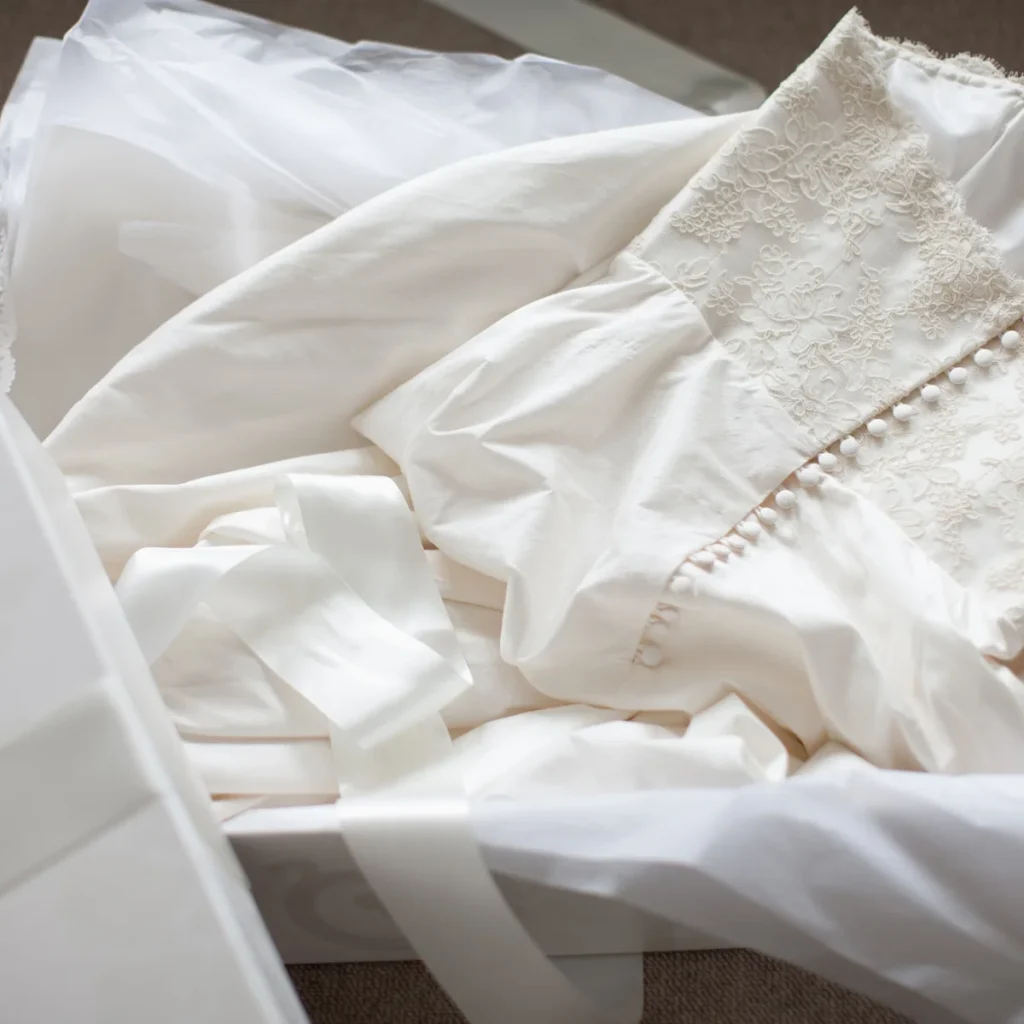
Start With Cleaning — Even If It Seems Unnecessary
The first step happens before any box enters the picture: take the dress to a cleaner who specializes in wedding gowns, ideally within a few weeks of the wedding.
Even if the dress looks flawless, there’s residue invisible to the eye — champagne, sugar, oils from skin — that you can’t see today but that turns into stubborn yellow stains a few years down the line. After cleaning, the care should continue: always handle the dress with clean hands, or better still, white cotton gloves, so no oil or residue ever touches the fabric.
An Everyday Closet Is Not an Option
We know it’s tempting to simply hang the dress in your bedroom closet and move on. But that’s exactly where most dresses start losing the battle against time.
An ordinary closet exposes the fabric to other garments, dyes, wooden drawers, and shifts in humidity — all silent enemies of a delicate textile. The only way to guarantee the dress arrives intact 10, 20, or 50 years from now is to store it in a museum-grade box: acid-free, lignin-free, and pH-neutral — like WedBox boxes — kept somewhere cool, dark, and dry.
Why a Museum-Grade Box Is the Only Right Choice
Fabric bags, plastic bags, cardboard boxes from the store — none of these were designed to last decades. They were designed to last until you got home.
-
- Plastic traps moisture, creating the perfect environment for mold and bacteria — and still lets through too much light.
- Ordinary cardboard contains acids that slowly migrate into the fabric and degrade it.
- Even boxes marketed as “acid-free” can betray you: if they aren’t also lignin-free, they turn acidic over time — lignin, found in wood-based materials, releases acids as it breaks down.
The only truly safe solution meets all three conditions at once: acid-free, lignin-free, and pH-neutral. That’s what creates a stable, breathable environment with nothing attacking the fabric — and keeps the dress away from light and dust, the two greatest enemies of any precious textile.
One last note, but an important one: always choose a box with enough room for the dress to breathe, without being compressed. [See here how to choose the right size for your dress.]
What About Accessories? The Same Rule Applies
Veil, shoes, jewelry — everything you wore that day deserves the same standard of care. Store each piece in a museum-grade box as well, acid-free and lignin-free, with white tissue paper separating and protecting each element individually.
Laid Flat in the Box. Never Hung.
Hanging a wedding dress, even for “just a few days,” puts constant strain on the seams — the weight of the fabric pulls downward and can permanently distort the piece.
The correct way is always to store it lying flat, inside a box like WedBox’s. When folding it, use rolls of tissue paper to round out each fold — this prevents sharp, permanent creases from forming. And while we’re on the subject of creases: it’s worth taking the dress out of the box once a year and refolding it slightly differently, so no single fold has time to become permanent.
Why Do Wedding Dresses Turn Yellow?
If you’ve ever seen an old dress with that characteristic yellow tint, the explanation is almost always the same: prolonged storage in plastic or ordinary cardboard, whose acids and chemical vapors quietly corrode the fabric, year after year.
That’s exactly why a museum-grade archival box — acid-free, lignin-free, and pH-neutral — remains the only proven, reliable way to prevent that long-term yellowing. Add a cool, dry, dark environment, away from direct sunlight and heat, and you’ll have everything needed for the dress to stay exactly as it was on the day it was worn — today, twenty years from now, and on the day you pass it on to someone you love.